
The Manual of Indulgences: A Comprehensive Overview (as of 04/07/2026)
The 1999 revision of the Enchiridion of Indulgences clarifies practices, defining partial and plenary indulgences, exempting temporal punishment after confession, and addressing historical abuses.
Historical Origins of Indulgences
The roots of indulgences extend remarkably close to the origins of Christianity itself, with practices resembling them emerging within a few centuries after the death of Jesus Christ. These early expressions weren’t formalized as the later system, but reflected a developing understanding of penance and reconciliation within the early Church. Initially, penance was often public and determined by bishops, varying in length and severity based on the sin committed.
Over time, a desire arose to offer some alleviation of this penance, not as a lessening of guilt – which required genuine repentance and confession – but as a reduction of the temporal consequences of sin. This concept evolved alongside the understanding of the Church’s authority to bind and loose, and the belief in the communion of saints. The Papal Bull, while not sanctioning later abuses, demonstrates early attempts to codify these practices, though scholastic opinions varied, even being rejected by bodies like the Sorbonne in 1482 and 1518.
Early Church Practices & Penance
Early Church penance was a rigorous process, markedly different from modern understandings. Following confession, individuals undertook public displays of repentance, often involving prolonged fasting, prayer, and even exile. The duration and severity were determined by the local bishop, reflecting the gravity of the offense and the penitent’s demonstrated remorse. This wasn’t merely about ‘paying a price’ but about visible conversion and reconciliation with the community.
As the Church grew, so did the need for a more structured approach. While the initial focus remained on genuine contrition, the concept of satisfying divine justice – addressing the temporal consequences of sin – began to develop. This led to the acceptance of various acts of piety, like charitable works and pilgrimages, as ways to lessen the burden of penance. These weren’t substitutes for confession, but supplementary actions demonstrating a commitment to spiritual healing and restoration.

The Development of Indulgences in the Medieval Period
During the Medieval Period, the practice of granting indulgences evolved significantly. Initially linked to acts of piety like pilgrimages and charitable donations, indulgences became increasingly formalized. The idea centered on lessening the ‘temporal punishment’ due to sins already forgiven – a concept rooted in the belief that even after absolution, consequences remained. This wasn’t a ‘get out of hell free card,’ but a reduction of purification needed after death.
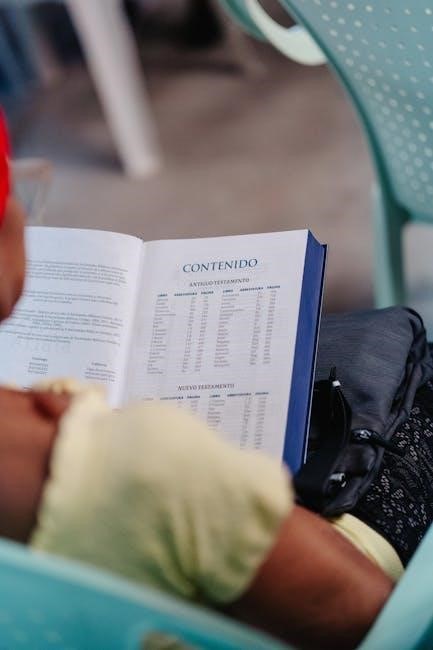
However, this period also witnessed troubling abuses. Indulgences were sometimes commercialized, with bishops and clergy offering them for monetary gain. This corruption, highlighted by HistoryExtra, transformed a spiritual practice into a moneymaking enterprise. While legitimate forms existed – linked to prayer, good works, and sacramental confession – the abuse fueled discontent and ultimately contributed to the Reformation, prompting calls for reform and a re-evaluation of the practice.
The Role of Pilgrimages in Obtaining Indulgences
Pilgrimages held a central role in the medieval practice of obtaining indulgences. Visiting holy sites – often associated with relics of saints or significant events in Christian history – was considered a powerful act of penance and devotion. These journeys weren’t merely physical; they represented a spiritual quest for forgiveness and a demonstration of faith.

Indulgences were frequently granted to those who undertook arduous pilgrimages, recognizing the sacrifices involved. This practice, noted in historical accounts, connected directly to the concept of temporal punishment. The hardship of the journey itself served as a form of penance, and the indulgence offered further remission; However, as with other aspects of indulgences, abuses arose. The commercialization of pilgrimage routes and the sale of indulgences linked to specific sites contributed to the criticisms that ultimately fueled the Reformation, highlighting the need for clarification and reform.
Indulgences and the Crusades
The Crusades significantly intertwined with the practice of granting indulgences, serving as a powerful incentive for participation in these holy wars. Papal bulls offered plenary indulgences – complete remission of temporal punishment – to those who took up the cross and fought to reclaim the Holy Land. This wasn’t simply a spiritual reward; it was a pragmatic tool to bolster recruitment and funding for the costly military expeditions.
The promise of an indulgence offered a compelling motivation, appealing to the deeply held religious beliefs of the time. It framed participation in the Crusades as an act of profound penance and devotion, ensuring salvation. However, this association also contributed to later criticisms. The linking of spiritual benefits to military action raised questions about the Church’s authority and the potential for exploiting faith for political ends, ultimately contributing to the controversies surrounding indulgences and the subsequent Reformation.

Theological Foundations of Indulgences
Indulgences address temporal punishment due to sin, following forgiveness of eternal consequences through confession and Christ’s sacrifice, utilizing the Treasury of the Church.
Understanding Temporal Punishment and Sin
Catholic theology distinguishes between eternal and temporal consequences of sin. While the eternal penalty – separation from God – is remitted through sacramental confession and divine grace, a temporal consequence remains. This isn’t a further punishment imposed by God, but rather the lingering disordered effects of sin, impacting one’s character and relationships.
These effects necessitate healing and restoration. Temporal punishment manifests as suffering, hardship, or the need for purification after death – a state often referred to as Purgatory. It’s crucial to understand that indulgences don’t forgive sin; forgiveness occurs through absolution. Instead, they remit the temporal punishment due to sins already forgiven.
The concept stems from the understanding that sin creates a debt, not just to divine justice, but also to cosmic order. Indulgences, therefore, offer a means to satisfy this remaining debt, accelerating the process of spiritual healing and aligning the individual more fully with God’s will. This framework emphasizes both divine mercy and personal responsibility.

Forgiveness of Sins: Eternal vs. Temporal Consequences
The Catholic Church teaches a nuanced understanding of sin’s consequences, differentiating between eternal and temporal repercussions. Eternal punishment, the ultimate separation from God, is entirely remitted through genuine repentance, confession, and acceptance of God’s grace—specifically, the sacrifice of Jesus Christ. This forgiveness restores one’s relationship with the Divine.
However, sin also incurs temporal consequences, representing the lingering effects of disordered actions. These aren’t additional punishments from God, but rather the natural fallout of choosing against divine love—damaged relationships, ingrained bad habits, and a weakened spiritual state. These require healing and restoration.
Indulgences address these temporal consequences, not by re-forgiving the sin itself, but by lessening the purification needed to fully repair the damage caused. They operate within the framework of a debt already satisfied in Christ, offering a means to expedite spiritual healing and growth. This distinction is central to understanding the purpose and application of indulgences.
The Treasury of the Church
The concept of the Treasury of the Church is fundamental to understanding indulgences. It isn’t a literal stockpile of merits, but rather represents the infinite value of Christ’s merits, combined with the prayers and good works of the Blessed Virgin Mary and all the saints. This treasury is inexhaustible, a boundless reservoir of spiritual grace accumulated throughout salvation history.
This treasury isn’t something earned by the Church itself, but is entrusted to it as the steward of God’s grace. The Church, through its authority, can apply these merits to the faithful who are properly disposed – meaning they have confessed their sins and possess a sincere desire for conversion.
Indulgences, therefore, are not independent acts of forgiveness, but rather the application of the treasury’s riches to remit temporal punishment. They are a means by which the Church, in its maternal care, assists believers in their journey toward holiness, utilizing the boundless grace available through Christ and the saints.
Applying the Treasury of the Church through Indulgences
The application of the Treasury isn’t automatic; it requires specific conditions and acts of piety. Indulgences aren’t a “get out of hell free card,” but a remission of temporal punishment due to sin – punishment that remains even after eternal guilt is forgiven through confession and Christ’s sacrifice;
These acts, as outlined in the Manual of Indulgences, encompass a range of devotional practices. They include reciting specific prayers (like the Our Father and Hail Mary), acts of charitable giving, and participation in the sacraments with proper disposition. Pilgrimages and veneration of relics can also be sources of indulgence.
Crucially, a sincere heart, detachment from sin, and the intention to avoid future failings are essential. The Church doesn’t grant grace, but rather facilitates its application to those who actively seek it through faith and good works, drawing upon the infinite merits within the Treasury.

The 1999 Revision of the Manual of Indulgences (Enchiridion of Indulgences)
This revision clarified definitions of partial and plenary indulgences, emphasizing that they remit temporal punishment after sacramental confession and Christ’s atonement.
Key Changes and Clarifications
The 1999 revision of the Enchiridion of Indulgences represented a significant effort to address longstanding misconceptions and streamline the application of indulgences within the Catholic Church. A core clarification centered on dispelling the notion of indulgences as a “get out of hell free card” or a monetary transaction for forgiveness. Instead, the document firmly re-established indulgences as a means of remitting temporal punishment due to sins – punishment that remains even after the eternal consequences have been forgiven through confession and Christ’s sacrifice.
Furthermore, the revised manual sought to move away from practices that had historically led to abuse, particularly the association of indulgences with financial gain. It emphasized that indulgences are not earned through payment, but through specific acts of faith, devotion, and charity. The changes also provided more precise guidelines for obtaining both partial and plenary indulgences, ensuring a clearer understanding of the conditions required for their application. This aimed to restore the theological integrity of indulgences and their rightful place within the Church’s sacramental life.
Partial vs. Plenary Indulgences: Definitions
The Enchiridion of Indulgences meticulously distinguishes between partial and plenary indulgences, based on the degree of temporal punishment remitted. A partial indulgence grants remission of some portion of the temporal punishment due to sins, the amount depending on the fervor with which the good work is performed. These are typically associated with specific prayers, acts of piety, or charitable deeds.
Conversely, a plenary indulgence aims for the complete remission of all temporal punishment due to sins. However, obtaining a plenary indulgence requires fulfilling specific, more rigorous conditions. These conditions, as outlined in the manual, generally include sacramental confession, Eucharistic communion, prayer for the Pope’s intentions, and a complete detachment from all sin, even venial sin. It’s crucial to understand that a plenary indulgence doesn’t erase the guilt of sin, which is forgiven through absolution, but rather removes the remaining temporal consequences.
Conditions for Obtaining Plenary Indulgences
Achieving a plenary indulgence, as detailed in the Enchiridion of Indulgences, necessitates fulfilling a precise set of conditions beyond simply performing the prescribed act. Foremost is sacramental confession; the individual must be in a state of grace, having confessed all known sins. Eucharistic communion is also essential – receiving the Body of Christ with a devout disposition.
Furthermore, a sincere prayer for the Pope’s intentions is required, demonstrating unity with the Holy See. Critically, a complete detachment from all sin, including even venial offenses, is paramount. This isn’t merely avoiding sin, but a genuine rejection of any attachment to it. Finally, performing the prescribed act – prayer, pilgrimage, or charitable work – with a truly contrite heart completes the requirements. Without all these conditions, only a partial indulgence is obtained.
Specific Acts Granting Indulgences
The Enchiridion of Indulgences outlines numerous acts capable of granting indulgences, both partial and plenary. Prayer, particularly reciting specific prayers like the Our Father and Hail Mary, frequently qualifies, especially when done before the Blessed Sacrament. Acts of charity, demonstrating genuine compassion and assistance to those in need, are also highly valued and can earn indulgences.
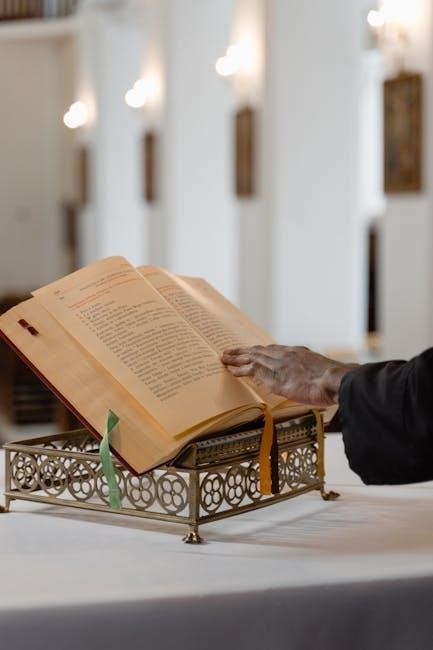
Pilgrimages to designated churches or holy sites, fulfilling specific conditions like devoutly visiting the church and reciting the Credo, are traditionally associated with plenary indulgences. Veneration of relics, performed with proper reverence and devotion, can also be indulgenced. Furthermore, even sacramental confession itself, when received with a contrite heart, can grant an indulgence. The key lies in performing these acts with the intention of seeking God’s grace and forgiveness.

Forms of Indulgences & Associated Practices
Indulgences manifest through prayer, charitable deeds, sacramental confession, and relic veneration; these practices, rooted in early Church history, address temporal punishment for forgiven sins.
Indulgences through Prayer
Prayer remains a central avenue for obtaining indulgences, reflecting the Church’s longstanding tradition. Specific prayers, formally recognized and outlined within the Manual of Indulgences, carry the potential for both partial and plenary remission of temporal punishment due to sin. Recitation of prescribed prayers, such as the Lord’s Prayer or the Hail Mary, when accompanied by the requisite dispositions – sincere contrition, a desire for reconciliation with God, and a firm purpose of amendment – can unlock these spiritual benefits.
The efficacy of prayer isn’t merely in the words themselves, but in the heartfelt devotion and faith with which they are offered. Furthermore, public and communal prayers, like those offered during liturgical celebrations or in designated places of pilgrimage, often hold enhanced indulgence potential. The 1999 revision emphasizes the importance of understanding the spiritual context and intention behind the prayer, moving away from a purely mechanical approach to the practice. Ultimately, prayerful engagement with the divine serves as a powerful means of accessing God’s mercy and experiencing the liberating effects of indulgence.
Indulgences through Charitable Acts
The Manual of Indulgences recognizes that acts of charity and compassion are potent expressions of Christian love, and thus, avenues for receiving indulgences. These aren’t simply about fulfilling obligations, but about embodying the Gospel message of selfless service to others. Donating to the poor, volunteering time to assist those in need, or offering practical support to individuals facing hardship all qualify as charitable acts capable of remitting temporal punishment.
However, the intention behind the act is paramount. Genuine empathy and a sincere desire to alleviate suffering are crucial for the indulgence to be effective. The 1999 revision clarifies that these acts must be performed freely and without seeking personal recognition or reward. Furthermore, the Church encourages acts of charity that address systemic injustices and promote human dignity. Engaging in charitable work, therefore, isn’t merely a means of gaining indulgence, but a tangible manifestation of faith and a pathway to spiritual growth, mirroring Christ’s own example of selfless love.
Indulgences through Sacramental Confession
The Manual of Indulgences firmly establishes Sacramental Confession (Reconciliation) as foundational to receiving any indulgence. It’s crucial to understand that indulgences do not forgive sins themselves; that is the exclusive work of absolution granted through the sacrament. Rather, indulgences remit the temporal punishment due to sins already forgiven – the negative consequences that remain even after reconciliation with God.
A sincere confession, coupled with genuine contrition and a firm purpose of amendment, is a prerequisite for obtaining any indulgence, whether partial or plenary. The act of confessing one’s sins demonstrates humility and a willingness to turn away from wrongdoing. The 1999 revision emphasizes that the spiritual benefits derived from confession are intrinsically linked to the possibility of receiving indulgences. Therefore, frequent and devout participation in this sacrament is strongly encouraged as a vital component of the Christian life and a pathway to spiritual purification and growth.
Indulgences and the Veneration of Relics
Historically, the Manual of Indulgences acknowledges a connection between the veneration of relics and the granting of indulgences, though the 1999 revision significantly moderates previous practices. While past eras saw substantial indulgences attached to visiting specific relics, the current guidelines emphasize the spiritual disposition of the faithful rather than the relic itself.
The act of venerating a relic – an object associated with a saint – is understood as an expression of faith and reverence for the saint’s life and holiness. However, an indulgence is not automatically gained simply by touching or viewing a relic. Instead, the faithful must perform the act with genuine piety and devotion, fulfilling the usual conditions for obtaining an indulgence, such as sacramental confession and prayer for the Pope’s intentions. The focus shifts from the material object to the internal act of faith and the desire for spiritual growth, aligning with a more nuanced theological understanding.

Controversies and Criticisms
Historically, indulgences faced criticism due to abuses, notably during the Medieval Church, and sparked the Protestant Reformation led by Martin Luther, questioning their theological basis.
Abuse of Indulgences in the Medieval Church
During the Medieval Period, the practice of granting indulgences became increasingly susceptible to corruption and abuse, transforming from a spiritual benefit into a means of financial exploitation. What began as a system intended to offer remission of temporal punishment for sins evolved into a lucrative enterprise for some within the Church hierarchy.
Specifically, indulgences were often sold for monetary gain, with individuals able to purchase remission for their sins or those of deceased loved ones. This commodification of grace led to widespread resentment and accusations of simony – the buying and selling of spiritual privileges. The practice strayed significantly from the original intent, focusing more on financial profit than genuine repentance and spiritual reconciliation.
Furthermore, the proliferation of indulgences created a climate where individuals believed they could circumvent the need for sincere contrition and amendment of life. This undermined the importance of genuine faith and moral conduct, fostering a superficial approach to religious practice. The abuses surrounding indulgences ultimately contributed to the growing discontent that fueled the Protestant Reformation, as reformers like Martin Luther vehemently opposed the practice.
Martin Luther and the Protestant Reformation
Martin Luther’s challenge to the sale of indulgences is widely considered a pivotal catalyst for the Protestant Reformation. His “Ninety-Five Theses,” posted in 1517, directly confronted the practice, arguing that true repentance required internal contrition, not merely the purchase of a papal pardon.
Luther vehemently opposed the idea that indulgences could offer forgiveness of sins, asserting that salvation was achieved through faith alone – a core tenet of Protestant theology. He believed the Church’s promotion of indulgences misled the faithful and undermined the authority of scripture. His criticisms resonated with many who were already disillusioned by perceived corruption within the Catholic Church.
The ensuing theological debate and Luther’s subsequent excommunication sparked a widespread religious upheaval. The Reformation led to the establishment of various Protestant denominations, fundamentally altering the religious landscape of Europe. Luther’s stand against indulgences wasn’t simply about a specific practice; it represented a broader challenge to papal authority and the established doctrines of the Catholic Church, initiating a period of profound religious and political change.
The Papal Bull and Scholastic Debate
The issuance of Papal Bulls concerning indulgences often sparked intense scholastic debate, particularly regarding their theological justification and practical application. While the Papacy sought to define and regulate the practice, theologians frequently questioned the extent of papal authority in dispensing spiritual benefits.
Notably, a “vague scholastic opinion” regarding indulgences was rejected by the Sorbonne in both 1482 and 1518, demonstrating pre-Reformation skepticism. This opinion, not a formalized doctrine, was improperly presented as dogmatic truth, fueling criticism. Cardinal Cajetan, a prominent theologian, actively opposed “extravagances” related to indulgences, highlighting internal dissent.
These debates centered on the nature of the “Treasury of the Church” – the source from which indulgences drew their power – and the precise mechanisms by which temporal punishment could be remitted. Scholastic arguments attempted to reconcile the practice with established theological principles, but disagreements persisted, contributing to the climate of questioning that ultimately culminated in the Reformation. The Bulls aimed for clarity, but often ignited further scholarly scrutiny.
Modern Misconceptions about Indulgences
Contemporary understanding of indulgences is often clouded by historical distortions and incomplete information. A prevalent misconception portrays them as a “get out of hell free card,” suggesting they offer forgiveness of sin without genuine repentance or sacramental confession. This is demonstrably false; indulgences address temporal punishment due to sins already forgiven.
Another common error frames indulgences as a medieval “money grab” by corrupt bishops. While abuses undeniably occurred, particularly in the late medieval period, this doesn’t represent the core theological principle. The 1999 revision of the Manual of Indulgences actively seeks to dispel such notions, emphasizing spiritual acts—prayer, charity, and confession—as pathways to obtaining them.
Furthermore, many misunderstand the purpose of indulgences, failing to recognize they are not about ‘buying’ forgiveness, but about applying the merits of Christ and the saints to lessen the consequences of sin. They are a means of spiritual growth and purification, not a shortcut to salvation, and require a sincere disposition.